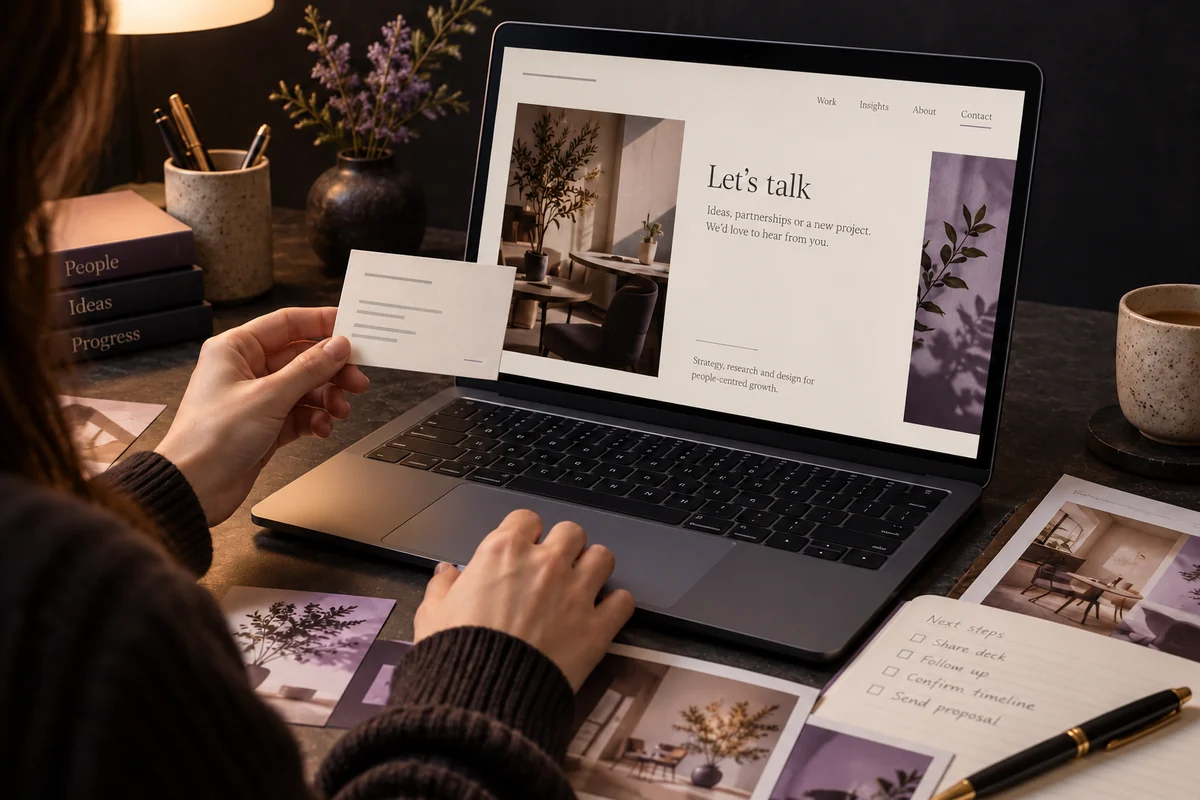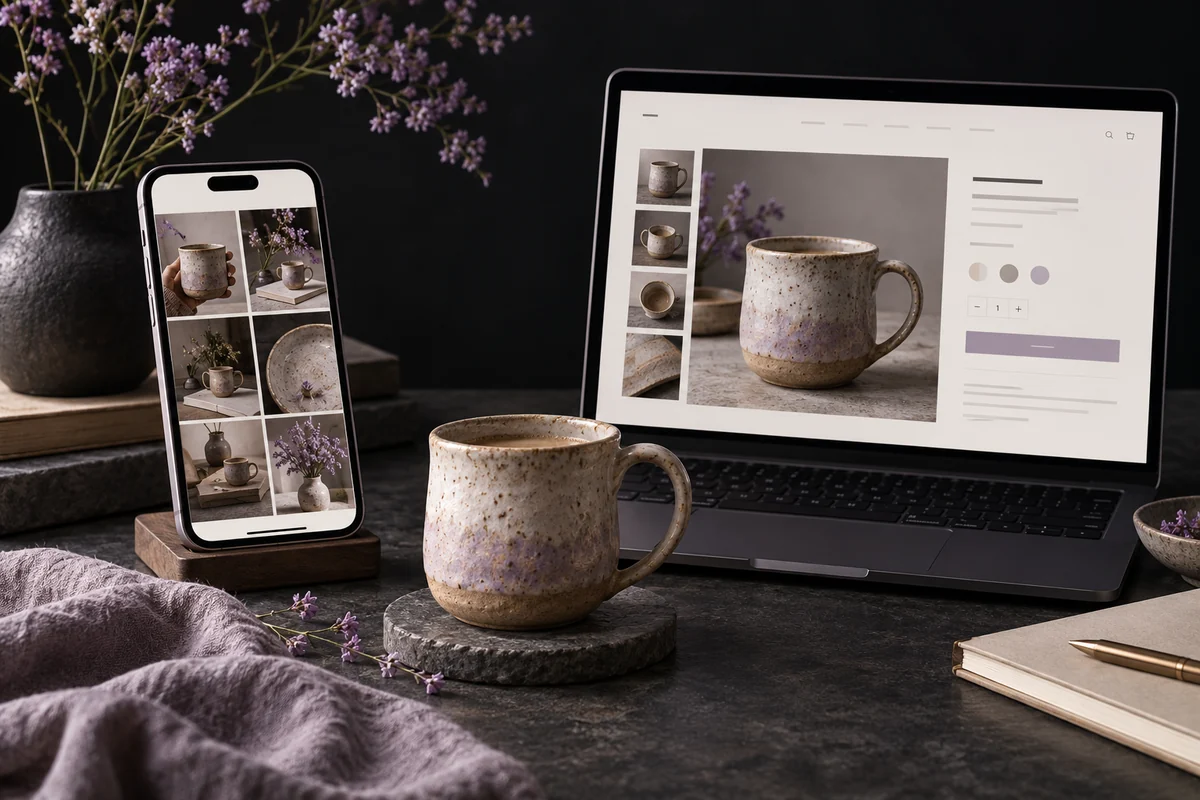
A professional website gives a small business a dependable place to explain its offer, show credible work and help customers take the next step. Social profiles and referrals can introduce the business, while the website provides information that is easier to organize, link to and maintain under its own domain.
That does not mean every business needs a large or expensive site. The right starting point is the smallest website that answers the customer's important questions and supports the business's actual way of working.
Give interested customers somewhere useful to land
Imagine someone receives your name from a friend. They want to know what you do, where you work and whether your service fits their request. If they must scroll through months of posts or send a message just to establish the basics, the business is creating unnecessary work for both sides.
A focused website can explain services, show relevant examples and provide current contact information in one place. You can share a specific service page in a conversation instead of rebuilding the explanation each time.
For a Lebanese business, that information may include the areas you actually serve, appointment arrangements and whether customers can visit. State those details accurately. Do not add city names merely to attract searches from places you do not cover.
Build credibility with information people can verify
Professionalism is more than a polished homepage. Visitors need clear descriptions, genuine work and consistent business details. Explain what a project involved rather than displaying unexplained images.
If you do not yet have testimonials or case studies, show your process and answer practical questions. Do not fill empty spaces with invented clients, fake review counts or stock images presented as completed work.
A website creates room for that evidence. It does not make a business trustworthy automatically. Our guide to building trust before a customer contacts you explains how to make the evidence useful.
Support discovery without expecting automatic rankings
A website allows you to publish distinct pages about the services and questions relevant to your audience. Clear text and useful links help people and search engines understand those pages.
Google's SEO Starter Guide explains the foundations of discovery, crawlability and useful content. Having a website alone does not guarantee indexing, rankings or inquiries.
For an eligible local business, a maintained Google Business Profile can complement the website. Link to the correct destination and keep business information accurate across both. Our Google Business Profile service addresses that separate part of the online presence.
Own the destination, understand the dependencies
A domain registered under your control can remain your public address when you change website providers. That makes domain access and renewal responsibilities important commercial details.
Ownership still needs a clear agreement. Ask who controls the domain account, which content and source files you receive, what can be exported and what depends on an ongoing platform subscription. Custom development, builders and managed platforms have different handover arrangements.
Keep recovery information current and retain access to essential accounts. A website under your domain is a stronger long-term asset when the business can actually maintain control of it.
Make the contact route fit the customer
If your customers prefer WhatsApp, provide a clear WhatsApp link. Offer an email address where that suits more detailed requests. Give visitors enough context before they leave the page to contact you.
For Arabic and English audiences, decide which language content is genuinely needed and review each version properly. A language switch that leads to incomplete or poorly translated information can create more uncertainty than it removes.
Test the site on a phone. Contact actions, service details and useful photographs should work without complex menus or heavy effects. A good mobile experience is part of the core scope, not a smaller version to consider later.
Start with a manageable scope
A straightforward service business may begin with a focused presentation covering its offer, evidence, service area and contact options. A broader catalog or several distinct services may justify more pages. An online store needs additional operational planning.
Budget for the responsibilities after launch: domain renewal, hosting, content updates, security and support. Decide who owns each task. A neglected website with outdated details can undermine the confidence it was intended to build.
If you are comparing approaches, read custom websites versus website builders . Choose according to the requirements, editing needs and ongoing responsibilities rather than the size of the initial feature list.
A professional website is useful when it makes your business easier to understand and easier to contact. For a focused project, explore our custom website service and bring the questions your customers ask most often. Those questions are a practical starting brief.